musicademy outstanding practical worship tuition
Musicademy
The world's best instructional resources for the worshipper
Skip to content
  • Home
  • About
  • Store
  • Blog
  • Contact
  • Members Area
  • LOG IN
  • MY ACCOUNT
  • Learn more about Musicademy products

    • The Musicademy Portfolio
    • Playing By Ear
    • Guitar (Worship)
    • Guitar (Rock & Pop)
    • Bass
    • Keyboards
    • Drums
    • Orchestral Instruments
    • Singing
    • Singing (Harmony & BVs)
    • Worship Backing Tracks
    • The MultiTrack Player

    Questions? Check the FAQ

  • And other bits…

    • Affiliate Marketing with Musicademy
    • Teaching using our DVDs
    • Worship training days
    • Local courses
  • Latest Free Videos

    NEW Worship Backing Band MultiTrack Player with key & tempo change

    Playing hymns on keyboard - How Great Thou Art - video lesson

    Worship guitar lesson - Substitute chords in C

    Worship bass lesson - In Christ Alone

    Free lesson - learn to sing the harmony part to Beautiful One


  • Free resources for church musicians

    New? Register with Musicademy to access free worship resources and sign up to our free worship magazine.


    Existing members Sign in here for the members area.

« Ask the expert – impact of downgrading to smaller speakers
Free video lesson – playing hymns on keyboard – How Great Thou Art »

Its a mad, mad, mad, mad world – Nick Langley on slash chords

By Guest Blogger | February 28, 2011

guns_n_roses_slash

A quick word about slash chords. Well, a word about slash chords. Or two. Having spent a dozen years in the musical wilderness, the thought of “Slash” chords filled me with rock ‘n’ roll anticipation: Yeehah! There was I expecting free Les Paul gold-tops, a “marlie” tech who’d rush on in between songs stuffing Marlborough cigarettes twixt my lips and sparking them up, (as I’d seen in Guns N Roses concert footage!), not to mention the tour bus, groupies and a heroin addiction. Wowzers! Imagine my disappointment, if you will, when I was informed that “Slash” chords were in fact “slash” chords and had no relation to Stoke-on-Trent’s finest (True. Google it).

In my day we called them inversions. A C/E is, as I’m sure you know, a C Major with an E bass, a C/G, a C major with a G bass, or, as they call them in my music room at home (the truly wonderful thing about the music room in our house, henceforth known as MY music room, is that once ensconced in it, a magical force takes over that results in me never, and I mean NEVER, being wrong. It’s quite astonishing really. To be fair, that in a large part is due to the fact that hardly anyone ever joins me in there. I’m led to believe by those with whom I share my home, that it’s because I refuse to accept that I’m ever wrong when I’m in there! You win some, you lose some). Where was I? Oh yes, they are known as 1st and 2nd inversions: the former is where the third of the triad is the lowest note, and the latter, where the fifth is the lowest note. As our American cousins say, “If it ain’t broke, don’t fix it!” (curiously coined by a chap that went around illegally “fixing” unbroken banks with a number of equally corrupt acquaintances). What is the point in re-inventing the wheel? The world was managing perfectly well with inversions so why rename them? Particularly when it involves disappointing an innocent passer-by such as my good self?

In all honesty, my stress levels were so high when I first began to attend Worship Team rehearsals, it didn’t even dawn on me that “slash” chords were actually inversions. I was too anxious to remember that E was in fact the 3rd degree of C major and therefore sticking it at the bottom of the pile constituted a good old fashioned inversion. I mainly remember spending most of time fending off requests to turn my amp up so that it was audible to whichever Worship Leader was on that week.

Whilst we’re on the subject of capos. I know, but I’m making this up as I’m going along (in case you hadn’t noticed). Perhaps one of the clearest examples of the Devil being at work is the aforementioned capo. Despite owning about 6 of the things – which I’ll explain later – I never use them. Can’t abide them. Not in principle or anything as crass as that, I just can’t use them. Or to be a tad more specific, I can’t use them properly. I’m led to believe by those of my chums who do use them, that they’re a very useful device for transposing guitars (upwards), but they always give the impression that they’re function is to transpose every string equally. Aah, that makes sense! The problem is, all of my capos are broken! If I stick one on, say, the 1st fret, each string will be transposed somewhere between 1 semitone and 1 semitone and an iddybiddy bit. And interestingly enough, the iddybiddy bit is exactly the most annoying amount of just a bit too much than you can get. Usually I end up with 3 in tune strings and 3 that appear to have almost miraculously managed to take on a life of their own and pitch themselves somewhere horrible. No, not horrible, annoying! With capo on, no amount of sophisticated, minor adjustments will make a blind bit of difference to the fact that the guitar sounds AWFUL! There is only one solution to the problem – remove the capo! Then put it in a little draw in MY music room, along with the other 5, and leave it there!

I tell you what, I’m feeling a little light headed now. I might have to go and have a little lie down in a tall, dark room!

Other posts you might like:

Practical ideas on chord charts and notation

Capo positions for awkward keys

Substitute chords in G

Substitute chords in B

Substitute guitar chords in A

Substitute guitar chords in E

Substitute guitar chords in D

Substitute chords for the key of C

Add9 guitar chords for adding beauty

‘5′ chords for strength and power
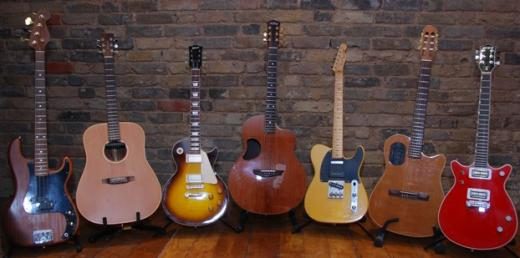
Substitute chords – B with a detuned E

Capo positions for awkward keys

Share this post: These icons link to social bookmarking sites where readers can share and discover new web pages.
  • Digg
  • del.icio.us
  • Facebook
  • Technorati
  • TwitThis
  • StumbleUpon
This entry was posted in Guitar, MusiComedy and tagged capos, nick langley, slash chords. Bookmark the permalink. Trackbacks are closed, but you can post a comment.
  • http://www.jamiemaxwell.co.uk Jamie Maxwell

    This made me laugh… incorrect musical terminology does my head in too… mate you need to get your guitar set up, i used to have that problem with capos but now the intonation is fixed it’s more or less perfect with a capo, even if i put it on like fret 6.

  • Arthur Davis

    Agree – most humorous! Got a G7th capo (funny name for a capo, not a chord at all!) for my 12string last year and I have to say that it is the best ever – no problems with losing tuning at all even on 7th fret (no I don’t use it there really, only as high as 5th fret).

  • http://cedarhome.org/worship Jason Chollar

    Yep, had this same problem with the spring style capo. Very good for quick changing with 1 hand on acoustics, but the extra force on light electric strings means it puts everything out of tune. So… get a Dunlop capo (or any kind with adjustable tension clamp!) that way you can get it tight enough to make all the strings ring, but not so tight that it puts your guitar out of tune!! So…time to get a different capo. It’s not really any more expensive either.

    Interestingly enough (at least it’s interesting to me) … I had the same problem when I first started playing my line6 Variax electric guitar. Because the sound I was hearing was the sound of an acoustic guitar model, I would grip tight, like I do on a real acoustic and … it was out of tune! I kept bending the notes out of tune by pressing down too hard … but when I played the electric guitar sounds everything was in tune… It took me a while to figure out what the heck was going on! Eventually I figured it out and trained myself to play with the same light touch on the variax, regardless of which sound model I was using. I have the now discontinued 300 series, the cheapest one, … and I still love it!

  • Jan Overfield

    I hear you re: inversions, Nick! As a music theory teacher I really appreciate the benefit of understanding the nature of a chord, and how that relates to its own key and others.
    However as a young teenager (late 90s), I found the term ‘slash’ chords very useful when making the transition from classically trained pianist to church keys player: it encompassed a whole gamut of chords – with bass notes other than those of inversions – which cropped up all over current worship songs at the time (e.g. ‘Let Everything That’). It made more advanced harmony very accessible to me from a playing-by-ear point of view, and I was able to appreciate the difference/equality status between inversions and other chord/bass relationships (sorry for the heavy use of slashes in that last sentence – no pun intended).

    My preference, by and large, would be to embrace both terms, emphasising the significance of those bass notes which make inversions, and those which add alternative harmonic colour to a chord progression. Lets face it – it’s so often these chords which can distinguish a song in the memory. Having said this, I do understand that essentially these other bass notes are constructing a different chord, but then we’ve all got to start somewhere. The all-encompassing (and perhaps insufficient) term ‘slash’ chord worked for me.

    Good article – and thanks for bringing it up :-)

  • Andy Chamberlain

    Hi Nick et al. I love Slash!
    Just to add a different perspective, Slash chords can be inversions but actually dont necessarily have to be. In the most common chord substituions that stay in key, the slash chords do end up as inversions, so in the key of G, we commonly substitute the Bm or the 3rd chord for a 1 chord with a 3rd bass note, so 1/3 or G/B which is a 1st inversion. Similarly we often substitute the less used 7 chord (F# dim in the key of G) for a 5/7 or a D/F# which we see a lot in pop or worship song chord pregressions. Again this is a 1st inversion. Less common but still used would be say a 1 chord with a 5 bass note, making a second inversion, so G/D in the same key. But the thing is because slash chords are basically a just a chord with a new bass note you can technically put any new bass note over a chord and as long as it sounds musical (i.e if it fits the chords that it has come from and going to) thats perfectly ok. So some slash chords will not be inversions. E.g again in the key of G a progression could go G, C, Am, Am/G, D/F# and back to G. The Am/G isnt an inversion as the G note isn’t in the Am chord (A,C,E) but can work as it moves well with the bass notes around it.

  • Andy Chamberlain

    Also, Capo wise, a reason why many people’s strings pull sharp when in use (and just as Nick said the guitar sounds plain ‘orrible) is to do with fret size. If your guitar has jumbo frets it will always pull sharp so try putting the capo directly on top of the fret and not just behind it as most people do and it should improve things a lot. Failing that, try thicker guauge strings and get the guitar intonated for a better compromise between low down the neck and up the dusty end…
    Typically, electric guitar wise i’ve found old or vintage style fenders with skinny frets much more usable with a capo (my old tele works fine all the way up) and some Gibsons notoroiusly difficult – especially those long necked SG’s. That said my Les Paul has been set up on on a Plek computer aided machine (expensive but worth the investment – google it) and its fine everywhere as long as im careful where i position the capo.

  • Tim Nevell

    Nick, you’re getting harder to follow.. but it’s all right :-)
    As regards slash chords, the keep-it-simple line for the basic/newish guitarist would be “Just play the chord and leave those bits for the bassist or pianist,” – which, for the sake of smooth playing, surely has its place, does it not?
    As regards capos, it never occured to me they could be out of tune – I suspect you revel in the alternative approach – after all, what could be more uneven than a human finger in a bar chord?? Andy’s idea of placing it ON the fret… “genial!” I can’t wait to try it. Will it stay there? It’s certainly an issue. I love capos, and the resultant bright sound. Why are some people so snobbish about them?

  • Nick Langley

    Hi All. True, not all slash chords are inversions, but they invariably seem to be! I’m of the Tim Nevell school of thought, leave the slashed bit to the bassist or keys player if unsure! Keep it simple!

    With regard to capos, I regularly check and set my intonation so it’s not that. Also, over the years I’ve used them on dozens of different types and builds of guitars with the same frustrating results. It’s not capos, it’s me! I seem to manage perfectly well without them so it’s no great loss. I’m intending to buy a James Tyler Variax soon and they have a “virtual” capo – wowzers!!

  • http://www.myguitarteacher.ca Scott

    I can honestly say that as a 20+ player and teacher, I can only recall once ever use a capo – and that was because I was getting paid in the studio to play one. But, in my personal playing, which is mostly electric, I have not needed nor desired a capo. There are literally hundreds of different voicings you can pull out of 6 strings (or 7 in my case), and that includes all manner of slash chords. Granted, there may be some nice ‘droning’-type chords that might sound good and should be explored with a capo – but, for any given Sunday I find that knowing my bar chords, their inversions and extensions (I love sus2′s and mi11′s) will help me to find my voice outside of the rest of the other instruments.

    One thing I really LOVE about the slash chords are the fact that they fit nicely in power chords.

    In theory we really only need the root and 3rd played to make a major chord, so why can we put D/F# with a D on the 5 string-5 fret and then the F# on the 6th at the 2nd fret? It’s still a D major chord But played against a G5, you have to admit – it’s sounds pretty good! Similarly try you next G/B with just the 5 and 4 strings at the 2nd and 5th fret respectively. Now play this in a G/B to a C5 combo, they work great. Many times I’ve forsaken an A-form bar for a slash of this type on the electric with great results.

    Don’t be afraid of slash chords, but don’t automatically reach for that capo either. Take some time and learn your theory and then start exploring all the different voicing that the guitar has to offer. Don’t be afraid to stretch your ears (and your fingers) past those 3 frets!! :)

  • Tim Nevell

    One day, like me, you might develop a bit of arthrytis, THEN you can give up the bar chords and learn to love the caop…;-)

  • Andy Chamberlain

    Hi Chaps.

    Actually i’m going to jump to the poor old Capo’s defence here. You see the capo doesn’t have to be a crutch or a cop out for people who cant find the real voicings. Think of it more of an instrument in itself. Of course its really important to learn where all the possible voicings are on a guitar so you have the choice of what ‘colours to paint with’ (which is exactly what we do on the Intermediate Electric DVDs) but many times i’ll choose to use a capo even if i dont need to depending on the style of music. So, I was doing a wedding band thing the other day and didnt touch the capo once because that ‘white boy soul pastiche thing’ every wedding band does requires a bit of synchopated guitar rhythms and barre chords with close voicings up the neck sound ‘authentic’ in that context. Conversely many of the modern worship songs that are written in that modern rock, U2, Kings of Leon, Coldplay kind of style have guitar parts with wide voicings using open strings that drone off 1sts and 5ths in the key togther with fretted notes high up. If you want to play that song in a non guitar friendly key like say Bb the guitar parts often just dont sound ‘authentic’ if you are always playing barre chords. Think of it this way, I’ve heard a few drummers approaching say a straight ahead song like Beautiful One with their favourite Dave Weckl fill in every turn around. Its more complex, its clever, its technically better, but it just doesn’t sound authentic for the style of song. So I’m not saying don’t use barre chords, don’t stretch yourself , don’t use ‘outside’ voicings etc etc but dont think of the capo is just for players who cant do the ‘real’ playing stuff either. Think of it as a tool to give you new voicings that you can’t otherwise achive without 6 extra length fingers and as a tool to make certain styles and guitar parts sound authentic.

  • MarkH

    Just to throw another thing into the mix – what about partial capos? I have one that capos the top 5 strings and leaves the 6th open – great for playing capo II in the key of E for example (kind of works a bit like dropped D tuning except you can use regular chord shapes). I have also on occasion used 2 capos – a full one and then, higher up, the partial one… mind boggling… but not much good for quick changes between songs!

  • Andy Chamberlain

    Yep agree with you Mark. Partial capos can be a really cool way of discovering new voicings. I’ve also tried one that only capos strings 5 and 4 (i.e. A and D). its basically like DADGAD but in E so EBEGBE i guess. I tried flipping it upside down too so it sat on the G and B strings and used G shapes. The options of potential open E, A, D and E strings with fretted notes gives some interesting possibilities. Never tried two capos myself, but if it works then yeah! I guess i just have a vision in my head of some worship leader using loads of capos for each song…kinda like pegs on some kind of musical clothes line.

  • Nick Langley

    I agree with Andy, capos are far from a crutch for poor players and come in to there own where, for example, you have 2 acoustic players on a given Sunday, as there’s little point in them both thrashing out the same voicings. Sadly, capos and I don’t see eye to eye so I don’t use them live but I do use them in the studio where I have more time to overcome my fear and check the tuning!

  • Suggestions for You

    The "Cut out and Keep" Guide to How Chords Work
    The "Cut out and Keep" Guide to How Chords Work

    Performance vs Worship. 6 things to consider.
    Performance vs Worship. 6 things to consider.

  • Free resources – index

    All the blog's free resources
    Guitar
    Vocals
    Keyboards
    Drums
    Bass
    Orchestral instruments
    Worship
    Tech stuff

  • New blog posts by email

    Enter your email address:

  • Recent Comments

    • Alun McCarthy on Ask the Expert – Is there a digital solution for worship bands to the problem of chord charts and sheet music?
    • Brenda Cameron on Ask the Expert – Is there a digital solution for worship bands to the problem of chord charts and sheet music?
    • Matthew Zipfel on Ask the Expert – Is there a digital solution for worship bands to the problem of chord charts and sheet music?
    • Marie from Musicademy on Ask the Expert – Advice on headset mics
    • Alyson on Ask the Expert – Advice on headset mics
  • Categories

    • 50+ practical tips
    • Administration
    • Ask the expert
    • Chords & strumming patterns
    • Free Worship Magazine
    • Free worship resources
      • Bass
      • Drums & percussion
      • Guitar
      • Keyboards
      • Orchestral instruments
      • Vocals
    • MusiComedy
    • Pick of the best – favourites
    • Song writing
    • Tech stuff
    • Visual worship & creativity
    • Worship
    • Worship leading
    • Worship theology

Copyright © 2008 Musicademy :: Musicademy Directory

  • Home
  • About
  • Store
  • Blog
  • Contact
  • Members Area