musicademy outstanding practical worship tuition
Musicademy
The world's best instructional resources for the worshipper
Skip to content
  • Home
  • About
  • Store
  • Blog
  • Contact
  • Members Area
  • LOG IN
  • MY ACCOUNT
  • Learn more about Musicademy products

    • The Musicademy Portfolio
    • Playing By Ear
    • Guitar (Worship)
    • Guitar (Rock & Pop)
    • Bass
    • Keyboards
    • Drums
    • Orchestral Instruments
    • Singing
    • Singing (Harmony & BVs)
    • Worship Backing Tracks
    • The MultiTrack Player

    Questions? Check the FAQ

  • And other bits…

    • Affiliate Marketing with Musicademy
    • Teaching using our DVDs
    • Worship training days
    • Local courses
  • Latest Free Videos

    NEW Worship Backing Band MultiTrack Player with key & tempo change

    Playing hymns on keyboard - How Great Thou Art - video lesson

    Worship guitar lesson - Substitute chords in C

    Worship bass lesson - In Christ Alone

    Free lesson - learn to sing the harmony part to Beautiful One


  • Free resources for church musicians

    New? Register with Musicademy to access free worship resources and sign up to our free worship magazine.


    Existing members Sign in here for the members area.

« Musical train wrecks – Van Halen’s Jump
Free MultiTrack Song of the Month – Psalm 62 (My Soul Finds Rest) by Stuart Townend and Aaron Keyes »

8 reasons why your guitar won’t stay in tune

By Andy@Musicademy | March 3, 2012

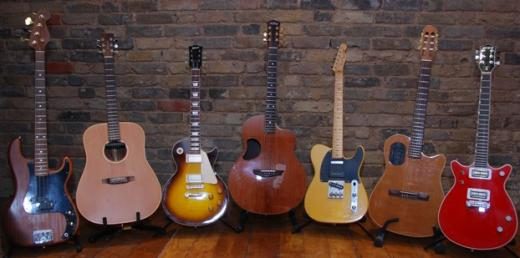
Why won't my guitar stay in tune

Why won’t your guitar stay in tune?

One of the most consistent top searches on this website is ‘my guitar won’t stay in tune’ and we tackled the question in an “Ask the Expert” post back in 2009. Tuning problems can be so frustrating. The first thing to check is that you have a decent tuner and that you are tuning up regularly. You can find an electric guitar tuner that will ensure your guitar playing sounds great. But once tuned, if your guitar won’t stay there or seems to go in and out of tune depending on what chord you are playing, here are the usual suspects:

1. The “nut”

The guitar nut sits at the very top of the fretboard. It’s really important to get the nut seating the strings correctly as they pass over it. If it’s cut too narrow it pinches the string as you tune and you get that sense of nothing happening until you hear a ‘ping’ Then all of a sudden the pitch of the string jumps upward. Also if it’s not cut flat the string essentially passes over a knife edge and is much more liable to prematurely break. This can all be cured with a gentle filing down but unless you really know what you’re doing take it to a professional repairer!  One thing you could try first is lubricating the nut by shaving some graphite from a pencil into each string slot to allow each string to pass over it more freely.

2. The tuning pegs

Check if there is play in your tuning pegs. You may be able to solve this by tightening the tiny screw in the peg itself, if that doesn’t help then again take it to a pro repairer.

3. Intonation

Another key tuning area is intonation, especially if you play chords that combine fretted and open notes higher up the neck. If a guitar isn’t intonated properly open strings don’t sound quite in tune with their octave notes up on the twelfth fret, and it’s those slightly out of tune notes that really grate. Much of this can be solved by tweaking the metal truss rod down the centre of the guitar neck but again if you don’t know what you’re doing take it to a professional luthier and get it set up properly. Just think of it like a routine car service that just needs to be done every so often. It may cost a few bucks but a really ‘in tune’ guitar is worth the expense.

4. The strings

And sometimes a guitar not staying in tune is purely down to old strings so do change them regularly. When you do, take a minute or two to stretch them in as they’ll stay at pitch much more quickly. If you’re not familiar with how to do this there are plenty of resources on YouTube to show you how and it’ll make a dramatic difference. Also when you change strings make sure you leave enough space for a number of windings around each string tree. Generally unwound top strings need more winds than the wound lower ones.

5. The capo

Another recurring tuning issue comes along with using a capo, especially on guitars with jumbo frets. Most guitarists realise that a badly placed capo will pull strings out of tune, but actually putting a capo on a guitar with bigger frets will cause the strings to pull down further onto the neck and so pull them sharp. Shubb type capos have adjustable tension which will help but alternatively try placing the capo directly on top of the fret rather than traditionally behind it and this should help.

6. The strap

One possible cause of tuning issues is that the strap is tied to the headstock. This will pull the strings sharp. If this is the case get a strap button screwed onto the heel of the guitar. They dont cost much at all if you fit it yourself or a shop will charge to fit it for you.

7. The climate

Humidity and temperature can have a huge effect on tuning too. In January I was in Edmonton, Alberta and the temperature changes due to taking instruments from the car into the outdoors and then into a warm building, coupled with the dry climate there caused enormous tuning problems. Similarly a church building warms up hugely when people come and start to sing. So again so the rule is to tune often and often.

8. You!

Sometimes bad tuning is caused simply by pressing a string too hard and causing it to go sharp, especially if you are playing electric or with light guage strings. I find Gibson electrics can be prone to this particularly at the G string. Alongside just pressing more gently you could try going up a string gauge or even replacing an unwound G with a wound one.

Once your guitar is in tune, take a look at our program of online rock and pop guitar lessons

Songs by U2, Chili Peppers, Radiohead, The Killers, Green Day, The Darkness, Lenny Kravitz, Blink 182, ACDC, KT Tunstall, James Blunt and more.

This online guitar instruction is a distillation of the live courses that Musicademy has taught to thousands of people. They are arranged in stages that will methodically develop your guitar skills in a step by step way. Each lesson should give you around 1 to 2 weeks learning if you are new to the techniques being shown. Each stage is designed to last a standard term or semester, so generally you should be able to master 3 stages per year if you practice a little every day.

Each 15-30 minute lesson will teach you all the relevant guitar chords, licks, riffs and strumming patterns to enable you to master the song.

Click through to see the full listing of lessons.
Share this post: These icons link to social bookmarking sites where readers can share and discover new web pages.
  • Digg
  • del.icio.us
  • Facebook
  • Technorati
  • TwitThis
  • StumbleUpon
This entry was posted in Ask the expert, Guitar. Bookmark the permalink. Trackbacks are closed, but you can post a comment.
  • Tim Nevell

    I have the suspicion that erosion in the fret board eg under B, 3rd fret is a problem, as a hollow develops which allows you to push further, thus making the B string go sharp on a D chord. This seems to have been my perennial problem, until I recently bought a Martin guitar with a fretboard made of something even harder than ebony, and now it’s not an issue any more. But my Seagull guitar, which has the most beautiful tone does give me this problem. Can it be rectified? Can parts of the fretboard be given new ebony inlays, for example?

  • Tim Nevell

    Actually having written all that, I had a really closer look, and saw that although hollows have developed, they look to be more between the strings(finger nail erosion?), and I don’t know if it’s a problem or not. But I also noticed that to a lesser or greater extent, the 1st 4 frets under the B and top E (unwound) strings have been flattened out by the strings. Can this be a problem? I don’t get any buzz, but the action is not particularly low. I know I can take this all to my luthier, but I ‘d like to hear another opinion.
    The worst problem I have with tuning is on the B string. When it is in tune with the lower D string when I play a D chord, it seems too flat when I play an Em, compared with the lower B note. Is that just me? Some days it seems worse than others…
    And generally, except for on my Martin guitar, there seems to be a diffrerence between tuning to a tuner, and tuning a guitar to itself. Do we just have to accept that guitars are like people, with their own quirks that we sometimes have to live with, even get to love..?

  • Mark B

    I teach guitar building and repair at a college in South London and am constantly dealing with tuning issues. This is a vast subject so excuse me while I ramble a bit…

    The advice in this article is sound but I would put the last point as the most important as the finger pressure on the strings affects the tuning. The harder you push down, the sharper the tone. Grip of Godzilla = anything up to a quarter tone on some instruments. If the nut is too high it has the same effect.

    Tim, it sounds like this is a part of your problem but the worn frets tend to suggest your guitar needs a service from a REPUTABLE luthier. It sounds like you need the fret height reduced a bit so that you can’t push too hard! If there is wear on the first and fourth frets then having this sorted out will do this anyway. It is possible (depending on the fingerboard) to clean with solvent and fill any dips on the fretboard with super glue. This is not recommended on expensive guitars but I have used it on Squier strats, Epiphone plywood boxes, and other cheaper acoustics and electrics, just to tidy them up. The glue is clear when polished and so doesn’t show much on darker fingerboards.

    Be aware, there are some right cowboys out there. I had an 18year old college student ring me to check before taking the advice of a large retail shop. They had lied to him that the truss rod in his very nice acoustic was broken and that they would give him £100 trade in against a new guitar out of the goodness of their hearts. The guitar they recommended was overpriced by around £200 and his guitar is easily worth £750! I spent 15 minutes giving the guitar a setup and now it plays beautifully. The shop should have done the same and charged in the region of £30 plus the cost of a new set of strings.

    Western tuning is a compromise. It is known as “well tempered” tuning. I think this is because if people stick to it then fewer musicians lose their temper (joke…ish). Guitar tuners do not tune to natural pitch, which is slightly different for each key! This can mean that a guitar will sound rubbish when playing in Bb along with a string section…

    For those of you who wish to look into this in detail (I know you’re out there!) please look at Dan Erlewine’s “Guitar Player Repair guide” ( £10-20 on Amazon). His books are very nearly the industry standard texts on the subject of repair and maintainance and I recommend them to all the pupils on my course.

    It is hard to diagnose problems regarding tuning without having the guitar in my hands as there are a number of variables that affect the tuning. My top five to check are:

    1 The nut. See above. Also, if you change string guage then the nut may need to be recut! If you have put on heavier or lighter strings and the lower frets are out of tune then this is a good candidate.

    2 The truss rod. This pulls the neck backwards to counter the tension on the strings. If the tension is wrong then the action and intonation are both affected. Can lead to buzzing. This is not a big job, it just needs a bit of experience. This is particularily a problem on new guitars after e few months “settling in”.

    3 The bridge saddle(s). If the strings go out of tune as you play up the fretboard, Eg open chords on fret 7 or above, then this is a prime suspect. These are easy to adjust on an electric, usually needing a screwdriver or allen keys. On an acoustic it is possible to adjust but do get advice as it isn’t straightforward and may cost more than the guitar is worth…

    4 Tuners. See above. Stiff tuners can be replaced if they can’t be repaired. A good set of Gotoh will set you back less than £50. Schallers are available as direct replacements for almost any known guitar.

    5 Strings. A friend was fed up with his hand built double cutaway Les Paul as it “just didn’t sound right any more”. He was on the point of selling it when I suggested that he change the strings before making that decision. I could hear that the tuning was out. He tried a new set of D’Addario instead of his usual Ernie Ball slinky’s and fell right back in love on the spot. We considered surgery to remove his guitar from him around two weeks later as we were beginning to miss him…

    I hope this is a useful contribution. If enough of you want advice then I’m sure that Marie and those wonderful people at Musicademy can come up with a discussion forum to help those of you with ailing axes…

  • Andy Chamberlain

    Hi Mark. Yes, a really excellent contribution, many thanks.

  • Tim Nevell

    Yes, really good. I’m confident in the luthier I know.You say lowering the fret height might help. Am wondering if you mean that literally, or whether you’re refering to the action? It does strike me as a touch high.
    (Presumably Godzilla plays in the key of G)

  • http://email kevin

    can the broken orings on the tuning pegs be a reason for its constant detuning…?

  • Rick Humphreys

    I have found that many new players make the mistake of tuning down to the pitch, which leaves gear lash in the tuners. As they play the strings then go flat. Always go below the pitch and tighten the tuner up to it. If you go too sharp loosen to below the pitch and start over.

  • Rick Humphreys

    On several occasions people have brought me instruments that “needed new tuners” because the unwound strings just would not stay in tune. I saved them a lot of money by showing them how to correctly install unwound strings with a slip proof hitch that doubles the string back on itself when it first goes through the hole in the peg.

    Another common problem is that people fail to keep tension on the string as it is wound onto the peg. I always make sure the to do this and to not wind the string back over itself. Put on several wraps that lay flat on the peg, starting at the hole and wrapping down toward the headstock (also helps maintain a good angle over the nut) and that’s all that is necessary… especially when you use the afore mentioned hitch.

  • Andy

    Mark
    I was reading the thread and my brain said – we need the input of Luthier and lo and behold your contribution was next… and a very good one too!
    your comment about guitar tuners not giving a natural pitch is particularly interesting to me as I have played violin in a worship environment for many years and have often wondered why I had had to compensate for the guitar sounding so out of tune… with one guitarist in particular it has been a long standing joke between us… NO MORE! :D

    thank you

  • Phil Alcock

    I understand the comment about tuners not giving ‘natural pitch’ – but what is the answer? What is the ‘best way’ to tune a guitar? Since our scales are a (‘well-tempered’) compromise what do we do? One classical guitarist/teacher said theoretically we should retune for each key!!!!

  • Andy Chamberlain

    Hi Phil – i’d say for recording an album you might want to get pinickity with the retuning for each key but in reality and especially for live playing just get your guitar properly set up for well compromised intonation, get the tuner needle in the middle as its a great compromise and not worry about it! Conversely i looked at buying a Tom Anderson Telecaster once that had a compensated tuning system where a few of the frets were moved to get the whole guitar sounding really ‘in tune’ – Bizarrely to my (and some other muso buddies) it sounded too in tune! Almost too nice, too cute! … So instead i bought a relic Strat which wasn’t compensated but more familiar, and so in a way, more ‘musical’. This is probably more to do with what we as guitarists are ‘used’ to hearing – and therefore to our ears that sounds more ‘right’ than an unaturally ‘in tune’ instrument.
    This is also why some guitar players prefer working with certain chord shapes in certain keys becuase that tuning compromise is more appealing to them…

  • Gerald Dixon Cummings

    Please tell me why I just bought a Martin J 40 brand new at a retail store. Nobody knows, or has a slight clue, as to when I’ll get it. I then hear tell Martin don’t ship when the outside temperature is below 20 degrees F. I paid in full for it on Dec.3/12 and was told a million stories that not a one panned out. Now, they say mid January… I guess they’ve never been in North Bay Ontario in Jan. The lake freezes a yard plus thick sometimes. Do I wait until April, when its around 20 degrees F? Pretty sad in my view…especially when spending near 4G’z.

  • Pingback: My Homepage

  • http://twitter.com/Monkoii Monkoii

    Point 3) [for Electric guitars not acoustic]: this can be down to the scale of the guitar which is often adjustable at the bridge on Tune-o-matics or Tremolo systems (not sure about Bigsby’s). But again, if not confident => take to luthier.

  • peter

    the strings om my accoustic are biting into the bridge causing grooves to form,whats the best material to use to fill them in

  • http://www.musicademy.com/ Marie from Musicademy

    To be honest this is the sort of job that needs experience. You
    probably need a new bridge saddle but you really know what you are doing with guitar repair. We’d strongly suggest taking it to a reputable local guitar luthier or you could end up make the instrument worse.

  • Suggestions for You

    The "Cut out and Keep" Guide to How Chords Work
    The "Cut out and Keep" Guide to How Chords Work

    5 things that happen when the songs are too high
    5 things that happen when the songs are too high

  • Free resources – index

    All the blog's free resources
    Guitar
    Vocals
    Keyboards
    Drums
    Bass
    Orchestral instruments
    Worship
    Tech stuff

  • New blog posts by email

    Enter your email address:

  • Recent Comments

    • Marie from Musicademy on Ask the Expert – Advice on headset mics
    • Alyson on Ask the Expert – Advice on headset mics
    • Marie from Musicademy on Ask the Expert – Advice on headset mics
    • Forrest on Performance vs Worship. 6 things to consider.
    • Chad Wilson on Performance vs Worship. 6 things to consider.
  • Categories

    • 50+ practical tips
    • Administration
    • Ask the expert
    • Chords & strumming patterns
    • Free Worship Magazine
    • Free worship resources
      • Bass
      • Drums & percussion
      • Guitar
      • Keyboards
      • Orchestral instruments
      • Vocals
    • MusiComedy
    • Pick of the best – favourites
    • Song writing
    • Tech stuff
    • Visual worship & creativity
    • Worship
    • Worship leading
    • Worship theology

Copyright © 2008 Musicademy :: Musicademy Directory

  • Home
  • About
  • Store
  • Blog
  • Contact
  • Members Area