
- Home
- Products
- Sound Tech and PA
- Sound Tech Course
- Free Tech Resources
- Free Sound Tech Lessons
- Playing By Ear
- Play By Ear Course
- Ear Training & Music Theory Resources
- Worship Leading
- Worship Leading Course
- Free Worship Leader Training
- Free Worship Leader Resources
- Band Skills Course
- Free Worship Team Training
- Free Worship Team Resources
- Subscription
- Blog
- Contact
- About
- Search
12 Tips for Electric Guitarists (from our 50+ Tips series)

Somebody recently pointed out that we’ve missed electric guitar out of our 50 tips series! How could we?! Particularly since I’m predominantly an electric player and its clearly God’s chosen instrument too… So here goes.
- Different approach to acoustic
When acoustic players pick up an electric they tend go one of two ways. They either strum it just like an acoustic or play pentatonic bluesy lead lines. If you strum with an electric you basically need to play it a lot less than an acoustic. So strum the essential groove and work with the natural sustain of the solid body rather than against it with too much rhythm. - Play rhythmically
The typical job for an electric in most worship band settings is not so much a lead guitar but mainly to add colour and dynamics to the rhythm of the song. So try picking out the notes in the chords, use different voicings further up the neck, use combos of fretted and open strings but above all make it sound like a part that backs up the main groove of the song. - Use CAGED voicings
The CAGED system is based around the major and minor open chord shapes of C, A, G, E and D moved up the neck sometimes in conjunction with a bar chord. CAGED will give you a complete framework of how to play any chord in any position up and down the neck. If you are not familiar with CAGED its covered very thoroughly on our Intermediate Guitar Course - The capo is your friend
Some people say the capo is a crutch. Think of it more of a tool that helps you make new voicings. If you play rolling jangley parts then use a capo to put the open strings in key and then the combo of open and fretted notes can create some great drone sounds. - Don’t clash with the keyboard
You play in the same octave spectrum as the keys so be careful not to clash with their parts. If you can’t hear them then watch their fingers to compliment their rhythms. Try to play in different spaces, with different tones and in different octaves. Also remember you don’t have to play all the time so if they are doing something nice, give em space! - Play texturally
Think about using your electric to add textural parts to a song a bit like in the way keyboard players use pads and filters. - Effects
I tend to use two overdrives, one for general and one for big out there sounds, a delay, some compression for tighter cleaner sounds and the occasional bit of modulation like chorus or tremolo to add some texture. The key things are really drive and delay. Delay can thicken up tones, add a sense of sustain to ringing chords as well as rhythmic textures like dotted 8th notes for U2 type sounds. However the golden rule is the delay time must be in synch with the songs’ tempo. Too slow and your notes sound indistinct and muddy and too fast and they sound like they are running away from you. Generally the more delay and reverb type effect you use the more your sound will seem to place itself at the back of the mix. So don’t overdo it unless you are specifically trying to create a texture or a wash. - Don’t use as much distortion as you think
Listen to the guitars on some of the quintessential classic rock tracks and many have much less distortion than you think. In fact too much distortion will loose you clarity in the mix. So practice playing with less gain, and executing each chord more clearly. Also great distorted tones are often quite dry so be careful of adding too much rev or delay as it can accentuate the high frequencies in a not too pleasant way. Again using both of these ideas will help you cut through the mix much better. - Play with volumes and tone controls
Guitar volumes are really designed to work best fully open. Backing them off can loose treble, same with tone controls too. However for some sounds this may be exactly what you want and there are many players who can create a variety of great tones just by playing with these controls. For overdrive with my Telecaster I’ll back the tone off to 8 and then adjusting the volume gives me more or less distortion. - Use more mid
If your motifs and lines don’t cut through the mix then use a little more mid to add punch. This is exactly why the Eric Clapton Strat has an active mid boost control. Pedals like the Ibanez Tubescreamer also have a natural mid ‘hump’ in their inherent tone and if your amp doesn’t have a mid control there are various drive pedals that will give you a dedicated mid pot. - Small tube amp
Most churches play at a volume WAY below the level most classic tube amps sound best at so there’s no point in buying your ultimate 100, 50 or even 30 watt weapon if it’s just for church environments. However in the last two years amp makers have cottoned on to this and there are now loads of good quality 5-10 watt amps that sound great at low volumes. - Amp positioning
If you stand right next to your amp you’ll only hear a very bassy tone but the people in the front will hear all the treble. So try to place the amp 6-10 ft away from you if possible. Speaker stands to get the sound up towards your ear lifting it away from the floor can loose bass and low end. Angle the speaker up towards your but keep it locked to the floor.
Other posts you may find interesting:
Which pedals do I need to start playing in a worship band?
Using a capo to play guitar in awkward keys
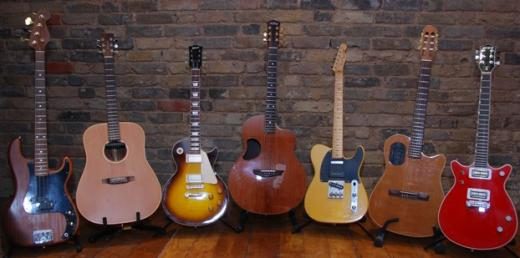 My Favourite Guitars and a Recommendation for a Great New Buy Today from Fender
  How to get maximum exposure for your song writing
  8 ideas to encourage more participation in worship
  Streaming your worship services legally | Everything you need to know
  Streaming online church services: the tech, the tips and the stories from around the world
  What do you most struggle with as a worship musician?
  Worship Leader Training: Beginning and Ending Songs Well
  Learn how to play by ear
  4 tips for making good use of your mic

