
musicademy outstanding practical worship tuition

Musicademy

The world’s best instructional resources for the worshipper
Skip to content
  • Home
  • About
  • Store
  • Blog
  • Contact
  • LOG IN
  • MY ACCOUNT
  • Learn more about our products . . .

    • Guitar (Worship)
    • Guitar (Rock & Pop)
    • Bass
    • Keyboards
    • Drums
    • Orchestral Instruments
    • Singing
    • Singing (Harmony & BVs)
    • Worship Backing Tracks

    Questions? Check the FAQ

  • And other bits…

    • Local Courses
    • Licensing
    • Musicademy Live
  • Newsletter signup

    Sign up for all the latest and greatest news.

  • Latest Free Videos

    Double stops on guitar

    Tips for working with a band


  • Exclusive freebies

    New? Sign up for access to our free downloads, keep track of your purchases and to manage your newsletter subscriptions.


    Already a member? Sign in to visit visit the members area.

« Drum Teacher’s Blog
Vocal Health – video tips »

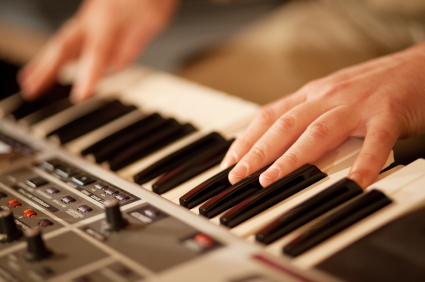
Recommended Keyboards to use in Church

By Tim | January 6, 2009

We have been asked for recommendations on keyboards to use in church. Here are some suggestions by Tim Martin, presenter of our worship keyboard DVDs:

The question of which keyboard to buy for church use is a common one. Many people are baffled by the choice available or simply don’t know where to start. The first question to ask is what the instrument will be used for. If you are looking primarily for piano sounds (along with electric pianos) then a stage piano or digital piano will usually be your best choice. These instruments typically concentrate on good piano and electric piano sounds, are 88 note instruments like a real piano and have a realistic piano action (the keyboard feels similar in weight and touch to a real piano). The downside of all of these instruments is that the keyboard means that they will be quite heavy, although some are more portable than others. These come in a number of different shapes, sizes and prices which all need to be considered.

The other option is a synthesizer which is more suitable for playing a second keyboard part (strings, pads, synthesized sounds, keyboard lead sounds and organs). These instruments will typically be shorter and lighter and will either have unweighted or semi-weighted keys – an advantage for some sounds but a clear disadvantage for keyboard players.

If a church is going to spend money on one instrument it is usually best to go for the first of these two options, some of which are also quite versatile if being used for synth sounds. The second option would generally be best if the sound you make is so guitar based that piano sounds are largely redundant or as a second instrument. Another consideration is that most professional keyboards do not have built in speakers so some kind of amplification will be necessary.

In this article I’ll look at the available stage piano’s which will probably be the best choice for most churches. These instruments are semi portable but have a hammer action, fully weighted keyboard. They are generally more flexible for combining sounds and live performance than digital piano’s which are aimed at the home user rather than for use in a band setting. I have started with the cheaper end and gone up from there. The prices are for guidance only and should be checked either with a dealer or online:
Yamaha P85 – (c. £400/$600)
These are neat little instruments with a lovely feel – the keys feel realistic although they could be a little heavy for some. A very limited range of sounds which cannot be combined with any degree of flexibility. If you’re only going to use piano and electric piano sounds this is a real contender – it’s relatively small and light and sounds good for the price. This keyboard has internal speakers but these aren’t large enough for using on their own – more for personal monitoring. The major downside of this instrument is that the only audio connections are its headphone sockets, which is less than ideal.
Yamaha P140 – (c. £620/$900)
Similar to the P85 but a bit more solid, a couple more sounds and this time with dedicated outputs. Again, it feels great and the sounds aren’t bad if you want basic piano settings most of the time. The big plus point of this instrument (together with the key bed) is how portable it is.
Yamaha CP33 – (c. £800/$1150)
This is the lower model in Yamaha’s professional stage piano range but is able to do significantly more than the ‘P’ series keyboards. These have significantly more (and better) sounds and are able to combing two sounds with control over the relative levels of each. The drawback of these compared to the ‘P’ series is that they don’t have built in speakers so external amplification is always needed.
Roland RD300GX – (c. £900/$1300)
This is Roland’s equivalent to the CP33. You can also combine sounds with control over the relative levels which can be a really useful feature, especially for putting strings or pad sounds behind a piano or EP. Again, there are no speakers here which may be a consideration for some. Apart from the difference of around £100 the choice between this and the Yamaha comes down to personal preference. Some people dramatically prefer the sounds of one manufacturer over another and this will need to be taken into account.
Kawai MP5 – (c. £1000/$1450)
This is the real dark horse in the pack. Having said this, it really is good. Having played one recently I wouldn’t hesitate to recommend it as a great choice. It has more than enough sounds to keep anyone happy and is extremely easy and intuitive to use. The piano sounds are good and, again, you can combine different sounds with control over the levels. The addition of a good pipe organ with groups of stops that can be added separately using the faders will be a great feature for those who don’t have access to a real or digital pipe organ. Having seen it, I wouldn’t hesitate to buy one at this price.
Roland RD700GX – (c. £1400/$2000)
This has all the bells and whistles you could wish for together with great piano and EP samples. There are numerous useable synth, pad and string sounds. The Hammond organs are programmable and can be very good in the right song. Combining sounds is relatively easy and the key bed feels great to play. No speakers on this model either, but this does keep the weight down and make it more portable than the Yamaha CP300 which is the direct competitor. The only real drawback to this model is that it may be a little complicated for some (although there are one touch piano settings for use when required).
Yamaha CP300 – (c. £1550/$2300)
This is the biggest of the keyboards here both in price and dimensions. It has the advantage of well powered onboard speakers and it can combine sounds like the models above. It is certainly the best stage piano that Yamaha have made for many year and well worth consideration for those with a budget to suit and who don’t need much in the way of portability.
Conclusions
There are more instruments available but these are the ones I have found to feel and sound best in recent years. A lot does come down to personal preference and for that reason it’s important to find somewhere that you can play the models you are thinking about for a good period of time (at least half an hour). This will give a good feel for the merits of the sounds and how useable the instrument is likely to be in your situation. Remember that for a number of the models above you will need to buy some kind of amplification for the keyboard player to monitor themselves even if the main output will go into the PA system. There are a number of different keyboard amplifiers around but I can’t look past the Mackie SRM150 which, for around £200/$300 makes an excellent personal monitor when mounted on a mic stand and can also be used as a mini PA system in small meetings.

A lot is clearly dependent on budget and all of the instruments above are a good choice in the right situation. If I were making this kind of purchase and could afford to do so I would choose between the last three models in the list (Kawai MP5, Roland RD700GX and Yamaha CP300). These are the most versatile and have the best sounds. Whatever choice you make it should be on the basis of which sounds best, which is most suited to your situation and which you find most fun to play – don’t underestimate this last element as you’ll become more creative if you can have fun with the instrument.

Share this post: These icons link to social bookmarking sites where readers can share and discover new web pages.
  • Digg
  • del.icio.us
  • Facebook
  • Technorati
  • TwitThis
  • StumbleUpon
This entry was posted in Ask the expert, Keyboards and tagged keyboards. Bookmark the permalink. Post a comment or leave a trackback: Trackback URL.

19 Comments

  1. Alistair McDonald
    Posted January 6, 2009 at 9:34 pm | Permalink

    What about the Clavinova? These things seem almost ubiquitous at churches, and the new-ish ones sound good as pianos and have umpteen other patches that seem to be OK. So, did you consider it and discount it, or is it not in the running at all for some reason?

    Cheers,
    Alistair

  2. Brian
    Posted January 7, 2009 at 2:42 am | Permalink

    The 3rd category that is gaining more ground is the midi-controller driving a laptop running software VSTs, Ableton’s Live or Reason. You can get weighted keys, realistic piano sounds and synth sounds that you can tweak and customize to your hearts content. You can even add effect to fine tune your patches like delay, reverb, overdrive, etc. When you need to upgrade you just update or switch software. No need to dump your now obsolete hardware for the newer model at twice the price. Please consider adding this approach in your review as well.

  3. Acts7
    Posted January 9, 2009 at 9:51 pm | Permalink

    You recommend synths as a second keyboard.
    But considering today’s church band makeup, Im surprised you put as much emphasis on the “digital piano” and less emphasis on the Yamaha Motif XS, or the Roland Fantom etc.

    Wouldn’t you agree that in 99% of church sound systems, and given the mix of other instruments that a synth is just as good if not better than a digital piano? Especially considering most of the ears of your audience. They don’t want “perfect pitch piano” played exclusively on the ivories. They want to hear what sounds good.

    Take for example the Motif XS8. The new keybed is phenomenal. For a live setting you can do everything a digipiano can do. And more.

    Or step down to the xs7 and you’ve got an amazing synth action for all your synth’d instruments (organs etc).

    more to say . but really curious why such little emphasis is placed on synth. And why you recommend the digipiano over anything else.

  4. Michael
    Posted January 10, 2009 at 12:03 pm | Permalink

    How can you leave out the Nord Stage?!
    It offers almost everything you could possibly want. GREAT piano sounds (and touch), AWESOME hammond sounds and more high end synth sounds than you can shake a stick at!

    This must be a contender!!

  5. Deanna Chapman
    Posted January 10, 2009 at 1:39 pm | Permalink

    i have been extremely pleased with my Yamaha S90ES.
    it includes all the features i see mentioned above and more than i’ll ever get to use properly.
    just a recommendation.

  6. Tim Martin
    Posted January 10, 2009 at 1:59 pm | Permalink

    Great points from all of you – thanks. I’ll try to address why I went in the direction I did!

    First of all, the Clavinova is a very popular instrument and they can be very good. However, in most cases I think that going in this direction is a case of style over substance – you get a good looking piece of furniture but it’s nowhere near as versatile as other instruments out there. They are primarily aimed at the home market and, as such, don’t offer everything you might like in a worship setting. The most important of these is the ability to easily mix sounds together and then set the level of each one separately. They’re good for some situations but I think they’re almost always beaten by more portable stage piano’s.

    Nord Stage – good point! I should have included this one. They’re excellent instruments and have some of the best sounds going. Having not played one, I’m not sure how they get on in terms of ease of use but all I’ve heard about them is good. In the UK you can pick one up for around £1700 putting them at the high end of the price range considered.

    I took a deliberate decision not to include the computer and soft synth solution in the article mainly because I think it’s too complicated for a lot of people. There are still many people who need to have a ‘turn it on and play’ approach to technology and I think that the church needs to be mindful of this. For example, although many of the musicians at my church could cope with using a master keyboard and computer the instruments get used for smaller services and gatherings during the week. Some of the players at these events would struggle to turn a computer on, let alone set up the right sounds and get it working with a master keyboard. I know that the idea of using these sounds is gaining ground – I use them myself on a regular basis, but I’m not sure it’s a good all-round solution unless all your musicians are very IT literate. There can also be problems when computers unexpectedly crash leaving you with nothing.

    On the synth side of things, I’m trying to be as broad as possible with the recommendations. I agree that the Yamaha motif and Roland fantom series are excellent and merit consideration. This is certainly the case where bands are guitar led and particularly where more than one guitar is used. However, in my experience it is the minority of churches that fall into this category. Large churches and those who have well established bands will have different demands and it may well be that the synth is the primary instrument in these settings. A lot of churches, however, will rely on the keyboard (using a piano sound) to knit everything together and lead the band. I suspect that, for a large number of churches, this is the case and that they rely on the piano so much that it is the most important sound. This is certainly the case with the church I attend, even though it is a large church – we don’t have a guitar-led sound most of the time and need the piano feel and authenticity of tone that a good digital piano gives. I do, however, think that striking a good balance is important which is why I would choose either the Roland RD-700, the Kawai MP5 or the Nord Stage which cover all bases pretty well.

    I guess I would say that, overall, you get my opinion here. It is one which is formed by visiting lots of churches and through the experience of bad choices as well as good ones. Having said that, what suits one person is not what’s best for everyone. Try to judge your needs according to the situation in which you find yourself. If piano sounds aren’t that important to you, then look more towards the synth market (I’ll try to do a short review of some of the options in this direction sometime soon), if you think it won’t exclude people, have a look at the VST or soft synth solution. If, however, you want a general purpose, all-rounder I don’t think that you can beat the Stage Piano for quality, versatility and fitness for purpose in a church environment.

  7. geoff boswell
    Posted January 10, 2009 at 2:48 pm | Permalink

    Mackie SRM150 brill little monitor
    Every chuch should have one [or two]

    Geoff Boswell
    Audio Consultant
    B&H Syscom Ltd

  8. Tim Martin
    Posted January 10, 2009 at 3:13 pm | Permalink

    Or three!

  9. Paul Adamson
    Posted January 10, 2009 at 8:56 pm | Permalink

    Hi Folks,

    Tim mentioned one of the keyboard’s he looked at only having a headphone out socket. I think this point is important to underline slightly more, speaking from a sound-guy perspective.

    I’ve seen a few churches amplifying only one side of a left/right stereo signal; the result being that it can sound thin or lacking in detail when played in mono (unless the instrument is clever enough to send a signal designed for mono-listening when only one side is connected).

    Some of the newer Yamaha (and other) keyboards have specific voices designed to work best in mono, and this would be worth consideration if you’re only going to connect a mono signal, or if you’re whole sound system is mono.

    Of course, the simple solution is to include someone sound-literate in the process to make sure that great sound from the instrument you’ve chosen gets out to the congregation.

  10. Jay
    Posted January 19, 2009 at 8:53 pm | Permalink

    Why not consider an arranger keyboard over a workstation? Something like the Korg PA500 or PA800, Yamaha PSR-S700 or PSR-S900, or Roland GW-8 or E-60. An Arranger is simpler to operate in a live setting than a workstation. They work very well in a live setting. Many of them are intuitive in how they operate making them almost turn on and play.

  11. Matt Osgood
    Posted January 20, 2009 at 4:37 pm | Permalink

    We use a Roland RD-700SX at church, which is superb for all the reasons mentioned above. However I’ve just bought an M-Audio ProKeys88 for a mere £330 new for my own use, and I am astonished with just how good it is, at about £1000 less than the Roland.
    The onboard sounds are limited (there’s 14), but they cover a superb grand piano, four great electric pianos, highly usable string and pad sounds, and other sounds that you would actually use. Even better, you can layer and split sounds with incredible ease, and there are dedicated volume faders to control the level of both layers and splits. You could for example have a piano layered with a pad in the right hand, with an acoustic bass in the left, and control the levels of all of those independently. And it’s got a decent weighted action with a full 7 octaves.
    If you’re in the market for basically a piano + a bit and have a limited budget (or even if you don’t have a limited budget!) this has got to be one to look at. Have a look and listen here http://www.m-audio.com/products/en_us/ProKeys88.html

  12. Alfred
    Posted January 20, 2009 at 9:49 pm | Permalink

    Tim or any of you pros, I am at the RD700 GX and the Yamaha S90 Es. What are the differences between these two especially in the piano section.

  13. Adrian Wood
    Posted April 28, 2009 at 9:42 am | Permalink

    How does the Yamaha DGX5xx and dgx6xx series compare at the budget end. I use a DGX-500 and felt it sounded better than many more expensive keyboards, with useful range of sounds and I features.

    How much would I gain if I were to upgrade this – our worship is half piano sound led and half guitar sound led (no drums or lead singers). How could I cost effectively upgrade – we are a small church without much money.

    I have also assumed that there is no point trying to use percussion sounds / machines – that without a live drummer such sounds would constrain worship too much. If there are an viable alternatives to a live drummer that anyone can advise me on, can you point me in the right direction?

  14. Douglas
    Posted May 13, 2009 at 6:15 am | Permalink

    I wish to use a midi keyboard connected to my laptop containing software witha small organ note sampling ,then output to speakers. I would be more than pleased to hear from anyone with knowledge/experience of this sort of set up. Thank you Douglas

  15. misha
    Posted August 17, 2009 at 6:27 pm | Permalink

    I need a personal keyboard. I might prefer to use my own keyboard at church if I buy something nice. My church can be very guitar based needing syths, but sometimes very keyboard/piano based with just a guitar, percussion and keyboard playing. I prefer to rather save up more and buy something better, than buying something and be frustrated that it’s not enough. At the moment my needs as basic as I learning to play, but I’m improving very quickly. I’m getting increasingly confused at what to buy.

    I’ve had the Roland RD300GX recommended to me as the RD700 is out of my price range at the moment. Should I rather save some more for the RD700 or would the RD300 be enough.

    Another option that was recommended that you don’t mention is a YamahaMo8. It also has 88 weighted keys, reasonable piano sounds, but has much more synth options, is very tweakable, and it’s only slightly above my budget.
    I can afford a yamaha mm8 right now.

    What do you think about my options? What would you recommend? Please help. I’m very confused.

  16. Emmanuel
    Posted November 12, 2009 at 10:40 am | Permalink

    Our church used to have a roland rd400 (i believe that’s the right nodel) but will be adding on the korg sv-1 to partner it up.
    what do you folks think of the sv-1?

  17. Angela
    Posted January 14, 2010 at 11:20 am | Permalink

    We’ve been using a Roland RD700 series paired with a Korg X5D. We cable it so that the Roland is the controller so by playing the keys on that you can operate the sounds of both instruments together. You can control the volume on all the sounds (up to 4 on the Roland, plus 1 from the Korg). You can also, of course, switch hands to the Korg keyboard to use just its sound. It gives a lot of flexibility, not least when wanting a different sound/balance of volumes within a song or when moving to the next song.

  18. Nic Arkley
    Posted July 8, 2010 at 3:23 pm | Permalink

    We recently purchased the Roland 700GX for church and I’d highly recommend it. It’s simple enough for ‘turn on and play’ musicians, versatile enough to give us everything from Hammond to pads to synths to EPs to lush grands, and has enough hands-on, straight-forward switching to create some simple set-ups for those keys players that are making the transition from ‘piano’ to ‘keys’.

    Prior to getting the 700GX we were using my Fantom X8 and VR760 (yes, I’m a Roland junkie) and for general church use I wouldn’t really recommend either of these: workstation keyboards quite simply scare the ‘turn on and play’ user (especially when they’re as brightly-lit as the Fantoms!) and the synths don’t satisfy the pure-bred pianists. The 700GX was the perfect solution for us. It might not be for you but it’s certainly worth a look and highly recommended (by ALL our keys players!).

  19. Gareth
    Posted September 3, 2010 at 7:34 am | Permalink

    Matt Osgood: Ugh, are you kidding???? I bought the Prokeys 88 3 years ago, it’s awful. As in, AWFUL. Useless, hopeless, overpriced and downright unplayable (there are really flimsy synth actions out there that are more playable and expressive than this thing). It might be the worst musical keyboard of any sort that I’ve played, and that’s no exaggeration. I was looking forward to finally disposing of this thing and getting a lovely Roland and then you come along recommending the Prokeys OVER it. So, does this mean even the high end digital pianos have dogshit unplayable action like M-Audio’s models? I’d pray and assume not, since a bit of Googling indicates that my disgust at M-Audio is in fact general consensus. Nobody likes this ****, only weirdos or people who are happy to get ripped off something filthy as a consequence of their modest income (which I don’t think is fair at all).

    At any rate I’ve got to step in and tell people to stay as far away as they can from M-Audio’s weighted boards (never tried their synth actions). If you just want to plonk out gospelly worship stuff or pop tunes then get a regular 61 key board or something like that. The Prokeys “action” is conducive to sod all – at least aftertouch affords you some modicum of dynamic control. (try playing a scale in p or pp on a Prokeys – hell, give any dynamic level a go and see if you can maintain it without the action basically doing what it likes and going LOUD soft LOUD MEGA LOUD LOUD soft).

    Oh, and if you’re after a good weighted board on a budget then look into Casio’s Privia series or Yamaha’s P and DGX line. Cost as much if not less than the Prokeys (which I’ve seen going for £500 in some places – unbelievable) and a lot of people seem to really like them – can’t say the same for the Prokeys or Keystation Pro.

One Trackback

  1. By Free Video Lesson - 10 things to do with chords on a keyboard | Musicademy on February 25, 2009 at 9:56 pm
    [...] organ sounds. We’ve incorporated a buyers guide (Tim has also written a recent blog piece on recommended keyboards for church) and plenty of instruction to enable you to develop the skills to play by [...]

Post a Comment

Your email is never published nor shared. Required fields are marked *

*
*
  • Suggestions for You

    Beginners Worship Guitar - Box Set Vols. 1-3
    Beginners Worship Guitar - Box Set Vols. 1-3

    Intermediate ACOUSTIC Guitar DVDs Box Set
    Intermediate ACOUSTIC Guitar DVDs Box Set

    The Musicademy Essential Vocals Warm-up MP3 Download
    The Musicademy Essential Vocals Warm-up MP3 Download

  • Free resources – index

    All the blog's free resources
    Guitar
    Vocals
    Keyboards
    Drums
    Bass
    Orchestral instruments
    Worship

  • Get free resources!

    Enter your email address:

  • Recent Comments

    • Paulychilds on Summer festival worship. Are we stuck in a rut?
    • Jon on Summer festival worship. Are we stuck in a rut?
    • Tim Nevell on Summer festival worship. Are we stuck in a rut?
    • Jon on Summer festival worship. Are we stuck in a rut?
    • Jeanne on Ask the Expert – Rock keyboard
  • Categories

    • 50+ practical tips
    • Administration
    • Ask the expert
    • Chord of the month
    • Free worship resources
    • Instruments
      • Bass
      • Drums
      • Guitar
      • Keyboards
      • Orchestral instruments
      • Vocals
    • MusiComedy
    • Newsletters
    • Pick of the best – favourites
    • Song writing
    • Tech stuff
    • Uncategorized
    • Visual worship & creativity
    • Worship
    • Worship theology
  • Authors

    • Andy Chamberlain (116)
    • Bob Kilpatrick (8)
    • Cat White (3)
    • Guest Blogger (43)
    • Jonny Baker (9)
    • Marie Page (208)
    • Mike Sessler (3)
    • Sam Hargreaves (6)
    • Scott Bartlett (2)
    • Steve Weeks (13)
    • Tim Martin (20)
    • Tim Bowdler (15)

Copyright © 2008 Musicademy :: Musicademy Directory

  • Home
  • About
  • Store
  • Blog
  • Contact